Zagora
زاكورة
Gateway to the lower Drâa Valley: palm groves, ksour, Tamegroute pottery, Saharan culture and road trips toward M’Hamid and Erg Chigaga.
Destination snapshot
Drâa-Tafilalet, Morocco
Ideal stay
2–4 days
Daily budget
450 MAD–2,200 MAD / day
Best time
October–April is the most comfortable period for Zagora and the lower Drâa…
Languages
Moroccan Arabic (Darija) · Arabic · Tamazight / Amazigh languages
Region
Drâa-Tafilalet, Morocco
At a glance
Why Zagora?
Use Zagora as a base for the lower Drâa Valley, Tamegroute, palm-grove villages and desert journeys toward M’Hamid and the Erg Chigaga dunes.
The Zagora story
Zagora is a small southern Moroccan town at the lower end of the Drâa Valley, best used as a base for palm-grove…
The Zagora story
Zagora is a small southern Moroccan town at the lower end of the Drâa Valley, best used as a base for palm-grove…
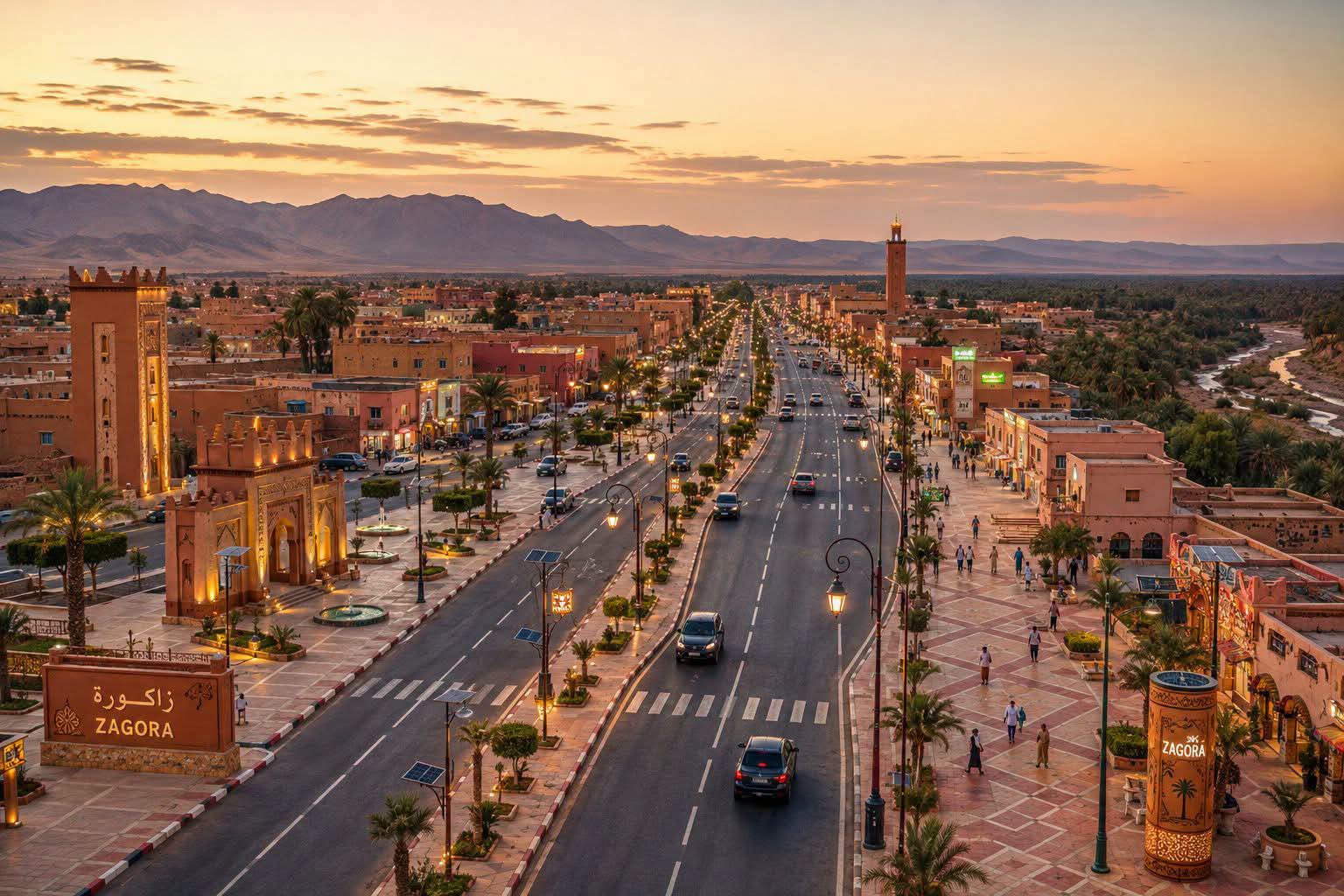
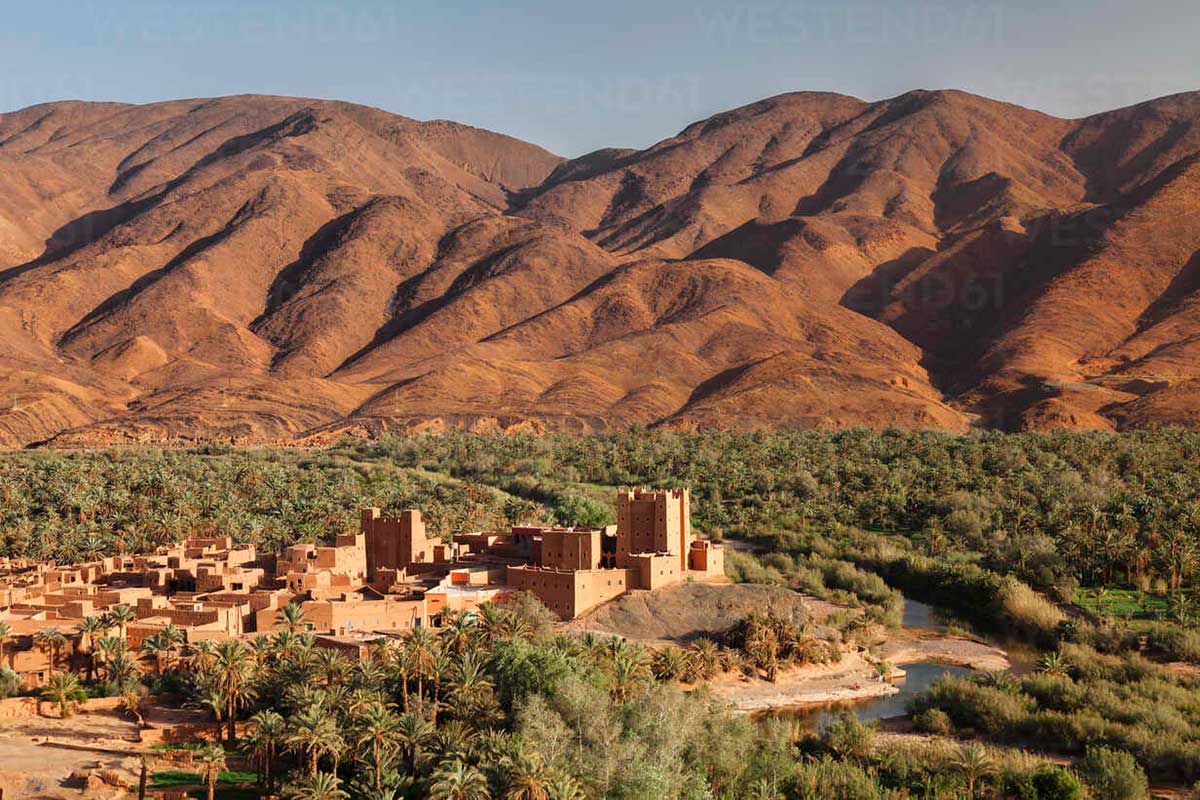
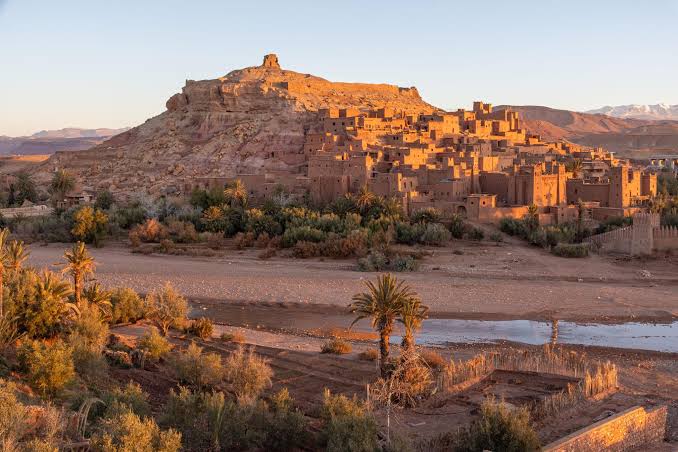
Zagora is a small southern Moroccan town at the lower end of the Drâa Valley, best used as a base for palm-grove landscapes, ksour, Amazigh and Saharan culture, and road journeys toward the desert. Its appeal is not a monumental old medina: it is the transition between the inhabited valley and the drier country farther south, with Jbel Zagora rising beside town and date-palm settlements stretching along the river corridor. The strongest visits combine Zagora itself with nearby places rather than staying only in the center. Tamegroute is known for its historic religious library and green-glazed pottery, while the road south leads toward Tagounite and M’Hamid, the last major settlement before off-road access to the Erg Chigaga dunes. North of Zagora, the Drâa Valley is lined with palm groves, earthen villages and kasbah scenery. Two nights works for a focused valley stop; three or four days is better if Zagora is your base for Tamegroute, a desert excursion or a slower road trip. Travelers should plan for heat, long driving distances and limited public transport outside the town. Zagora is especially rewarding for travelers who value desert landscapes, photography, road journeys and regional culture over conventional city sightseeing.
Known for
Best for
When Fez may not fit
6 practical points — tap to read
When Fez may not fit
6 practical points — tap to read
- You want a dense city packed with major monuments within walking distance.
- You strongly dislike heat, dust or long road transfers.
- You want reliable rail transport or frequent urban public transport.
- You need consistently step-free sightseeing without advance planning.
- You want a nightlife-focused city break.
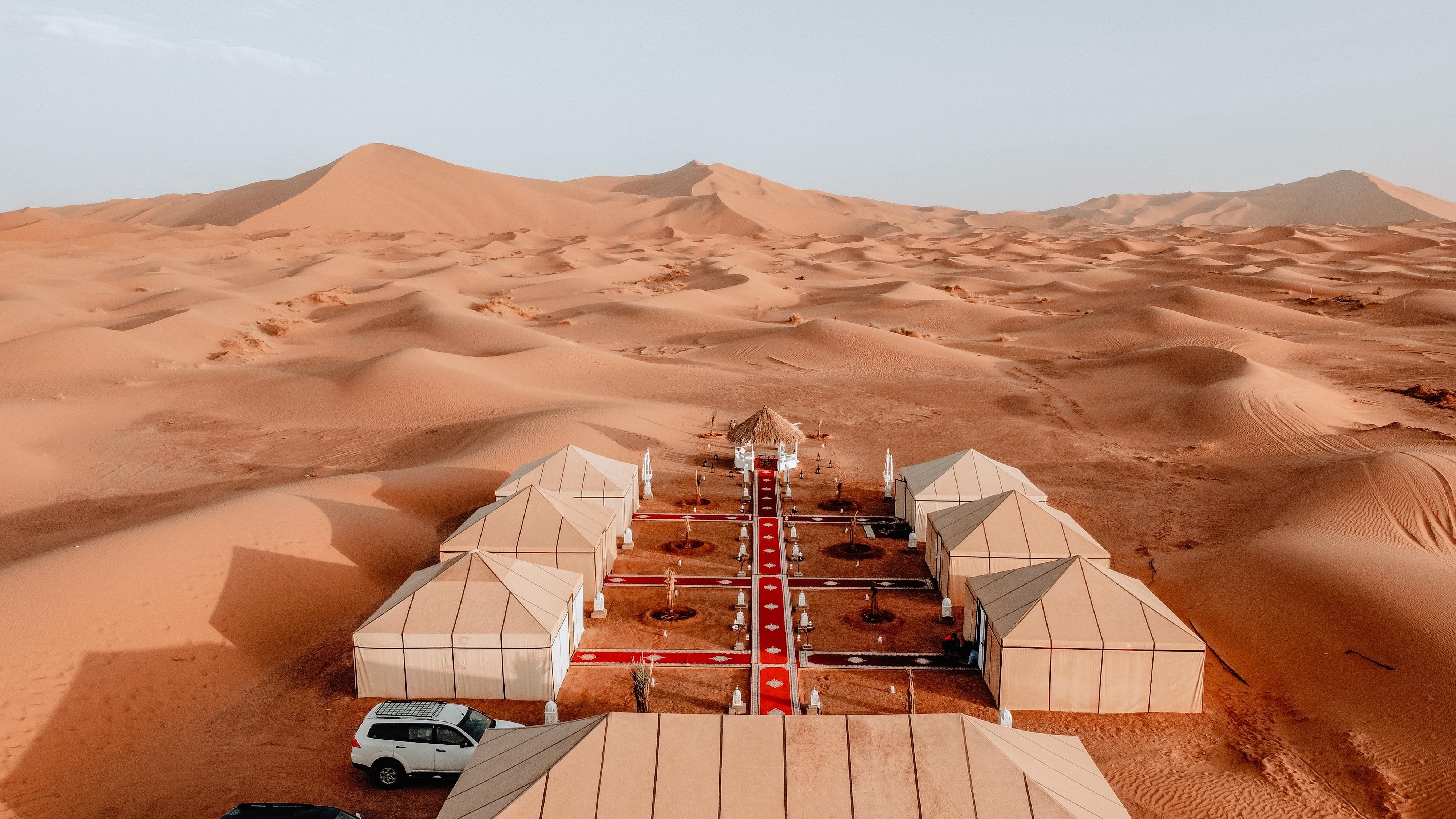
- You expect large sand dunes directly inside Zagora town.
Plan smarter
Open only what you need
The full guide is here without forcing you through walls of text. Tap a card for the detail relevant to your trip.
How much time to give it
Choose a trip length to see a realistic pace.
Zagora and Tamegroute
1 days
Zagora and Tamegroute
1 days
Use Zagora as the base, spend the cooler morning around the palm-grove edge and local center, then visit Tamegroute for pottery and heritage. Return for sunset near Jbel Zagora and a relaxed dinner.
Lower Drâa Valley essentials
2 days
Lower Drâa Valley essentials
2 days
Day one: Zagora, palm groves and Tamegroute. Day two: drive south through Tagounite toward M’Hamid, with enough time to experience the changing valley and desert-edge landscape without rushing back after dark.
Zagora plus a true desert night
3 days
Zagora plus a true desert night
3 days
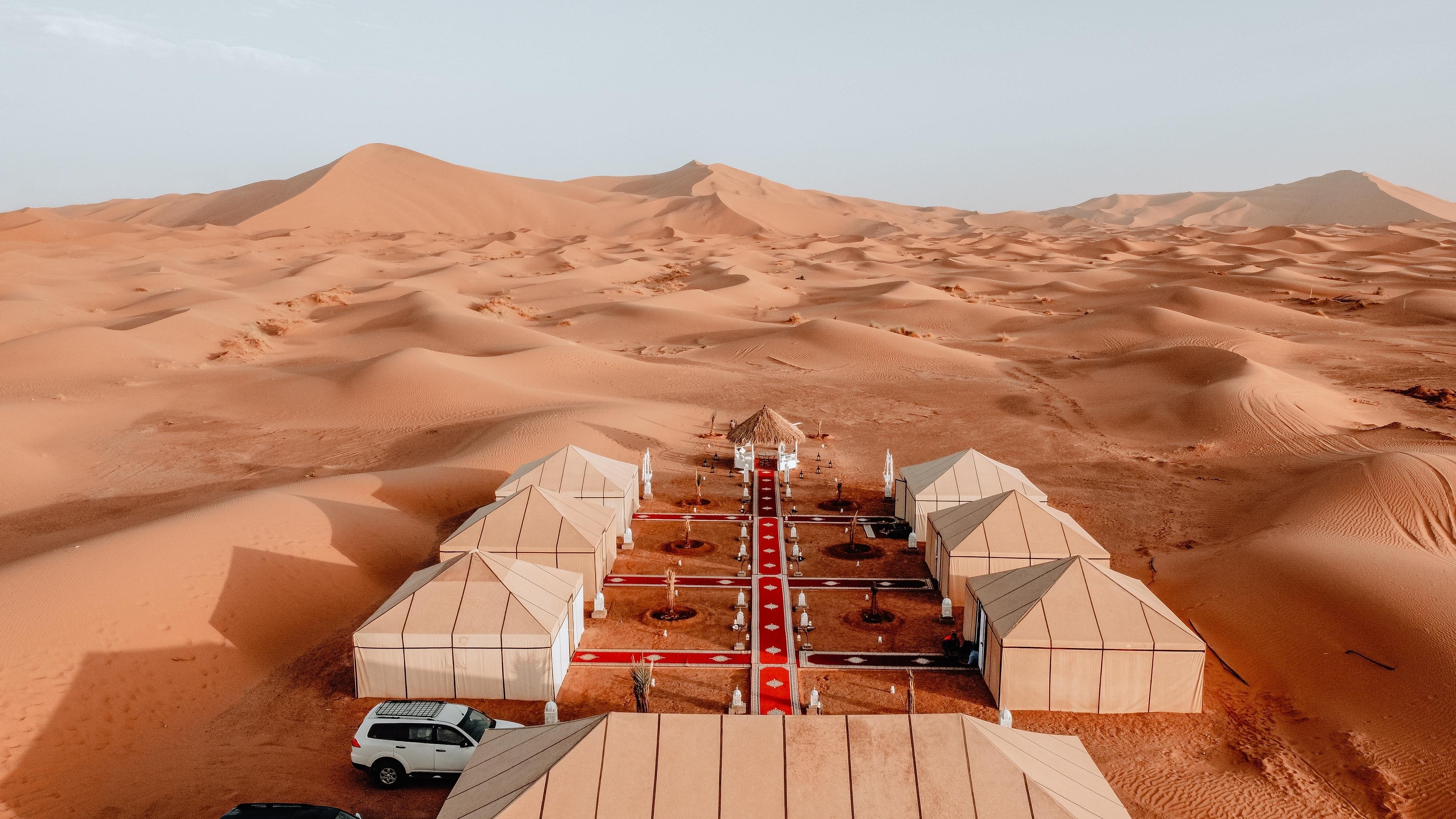
Spend the first day in Zagora and Tamegroute, travel to M’Hamid on day two and continue with a reputable off-road operator toward Erg Chigaga for an overnight camp. Return through the lower Drâa Valley on day three, allowing generous travel time.
Weather & seasons
October–April is the most comfortable period for Zagora and the lower Drâa Valley, with cooler conditions for village walks, desert excursions and long drives. March–April and October–November are particularly good all-round months. Winter nights can be cold, especially outside town and in desert camps. May–September can be extremely hot, with summer afternoons often unsuitable for extended outdoor sightseeing.
Climate overview
Zagora has a hot, arid desert-edge climate with intense sunshine, very low rainfall and large day-to-night…
Climate overview
Zagora has a hot, arid desert-edge climate with intense sunshine, very low rainfall and large day-to-night…
Zagora has a hot, arid desert-edge climate with intense sunshine, very low rainfall and large day-to-night temperature swings. Summers are extremely hot; spring and autumn are warmer but far more manageable; winter days are often pleasant while nights can become cold. Sun protection, hydration and layers for evening are important year-round.
Spring
March and April are excellent for valley and desert travel, with warm days and generally comfortable mornings and…
Spring
March and April are excellent for valley and desert travel, with warm days and generally comfortable mornings and…
March and April are excellent for valley and desert travel, with warm days and generally comfortable mornings and evenings. By May, daytime heat becomes much more demanding.
Summer
June–September is very hot. Plan outdoor activity for early morning and late afternoon, use air-conditioned transport…
Summer
June–September is very hot. Plan outdoor activity for early morning and late afternoon, use air-conditioned transport…
June–September is very hot. Plan outdoor activity for early morning and late afternoon, use air-conditioned transport where possible, carry more water than usual and avoid assuming remote desert routes have reliable services.
Autumn
October and November are among the best months for Zagora, with warm days, cooler nights and good conditions for road…
Autumn
October and November are among the best months for Zagora, with warm days, cooler nights and good conditions for road…
October and November are among the best months for Zagora, with warm days, cooler nights and good conditions for road trips, palm-grove walks and desert excursions.
Winter
December–February brings mild to warm days but cold nights, especially in desert camps or exposed rural…
Winter
December–February brings mild to warm days but cold nights, especially in desert camps or exposed rural…
December–February brings mild to warm days but cold nights, especially in desert camps or exposed rural accommodation. Pack warm layers even when daytime sunshine feels strong.
Arrival & movement
Getting there and moving around
Getting to the city
Zagora is reached mainly by road, with a small regional airport serving limited flights. Most overland travelers…
Getting to the city
Zagora is reached mainly by road, with a small regional airport serving limited flights. Most overland travelers…
Zagora is reached mainly by road, with a small regional airport serving limited flights. Most overland travelers arrive from Ouarzazate through the Drâa Valley or continue south toward Tamegroute, Tagounite and M’Hamid. Coach and shared-transport services operate on regional routes, but frequency is much lower than in Morocco’s major cities. There is no passenger railway station in Zagora, so rail travelers normally connect by road from another city.
Getting around
Central Zagora is compact enough for short walks and petit taxis cover local trips. For Tamegroute, palm-grove…
Getting around
Central Zagora is compact enough for short walks and petit taxis cover local trips. For Tamegroute, palm-grove…
Central Zagora is compact enough for short walks and petit taxis cover local trips. For Tamegroute, palm-grove villages, M’Hamid or desert trailheads, road transport is essential. A rental car gives the most flexibility for the Drâa Valley, while a private driver or organized excursion is easier for travelers who do not want to manage remote-road logistics. Erg Chigaga requires an appropriate off-road transfer from the M’Hamid area rather than an ordinary city taxi.
Airport access
Zagora Airport (OZG) is a small regional airport outside town with limited scheduled service compared with Marrakech,…
Airport access
Zagora Airport (OZG) is a small regional airport outside town with limited scheduled service compared with Marrakech,…
Zagora Airport (OZG) is a small regional airport outside town with limited scheduled service compared with Marrakech, Casablanca or Ouarzazate. Flight schedules can be seasonal or infrequent, so check ONDA and the operating airline before building an itinerary around it. For most visitors, road arrival from Ouarzazate remains the more flexible option. Arrange a taxi or accommodation transfer in advance for late or infrequent arrivals.
Train access
Zagora has no ONCF passenger railway station. Travelers using Morocco’s rail network must connect onward by road,…
Train access
Zagora has no ONCF passenger railway station. Travelers using Morocco’s rail network must connect onward by road,…
Zagora has no ONCF passenger railway station. Travelers using Morocco’s rail network must connect onward by road, typically via Marrakech or another rail-served city before continuing by coach, private transfer or rental car through Ouarzazate and the Drâa Valley.
Bus & coach
Intercity coaches and regional shared transport connect Zagora with Ouarzazate, Marrakech and other southern towns,…
Bus & coach
Intercity coaches and regional shared transport connect Zagora with Ouarzazate, Marrakech and other southern towns,…
Intercity coaches and regional shared transport connect Zagora with Ouarzazate, Marrakech and other southern towns, although timetables and departure points can change. CTM and other operators may serve the route depending on the date. Confirm the exact operator, station and arrival time before travel, especially if you have a same-day desert excursion or accommodation transfer.
Walking
The town center is fairly walkable, but Zagora’s main attractions are spread across the wider valley. Walking is…
Walking
The town center is fairly walkable, but Zagora’s main attractions are spread across the wider valley. Walking is…
The town center is fairly walkable, but Zagora’s main attractions are spread across the wider valley. Walking is useful for local streets, markets and short palm-grove sections, not as the sole transport strategy. Heat and strong sun can make even short distances tiring in warmer months, so carry water and avoid midday walking in summer.
Medina access
Zagora does not have the kind of large, enclosed medieval medina found in Fez or Marrakech. The practical issue is…
Medina access
Zagora does not have the kind of large, enclosed medieval medina found in Fez or Marrakech. The practical issue is…
Zagora does not have the kind of large, enclosed medieval medina found in Fez or Marrakech. The practical issue is access to nearby ksour, palm-grove lanes and traditional villages, where roads may narrow and surfaces can be uneven. If staying in a rural kasbah, guesthouse or village property, confirm the final vehicle access, parking and luggage arrangements before arrival.
Choose your base
Where to stay in Zagora
Choose by atmosphere and access, then compare actual stays.
Zagora Center
Best for: Practical base, restaurants, ATMs and transport
Zagora Center
Best for: Practical base, restaurants, ATMs and transport
Best for: Practical base, restaurants, ATMs and transport
The easiest area for short stays, with everyday shops, banks, cafés and taxi access. It is functional rather than historic, which makes it useful before or after desert excursions.
Palm Grove / Drâa edge
Best for: Quiet stays, walking and landscape
Palm Grove / Drâa edge
Best for: Quiet stays, walking and landscape
Best for: Quiet stays, walking and landscape
Guesthouses and kasbah-style properties near the palm groves offer a calmer atmosphere and better scenery than the town center, but confirm road access and evening transport.
Jbel Zagora side
Best for: Views, sunsets and quieter accommodation
Jbel Zagora side
Best for: Views, sunsets and quieter accommodation
Best for: Views, sunsets and quieter accommodation
The mountain rising beside town gives Zagora its visual identity. Properties on this side can feel more open and scenic, though they may be less convenient without a car or driver.
Amezrou
Best for: Local atmosphere, palm-grove setting and traditional architecture
Amezrou
Best for: Local atmosphere, palm-grove setting and traditional architecture
Best for: Local atmosphere, palm-grove setting and traditional architecture
South of central Zagora, Amezrou has a more village-like feel and is useful for travelers who want to stay close to local life rather than on the main commercial streets.
Tamegroute
Best for: Pottery, religious heritage and craft visits
Tamegroute
Best for: Pottery, religious heritage and craft visits
Best for: Pottery, religious heritage and craft visits
About 18 km south of Zagora, Tamegroute is a separate settlement rather than a Zagora neighborhood, but it is one of the region’s essential cultural stops and can also work for a quieter overnight.
Tagounite
Best for: Road-trip stop and deeper lower-Drâa atmosphere
Tagounite
Best for: Road-trip stop and deeper lower-Drâa atmosphere
Best for: Road-trip stop and deeper lower-Drâa atmosphere
Farther south toward M’Hamid, Tagounite is a practical staging point for travelers moving slowly through the valley. Services are more limited than in Zagora.
M’Hamid
Best for: Desert departures and remote atmosphere
M’Hamid
Best for: Desert departures and remote atmosphere
Best for: Desert departures and remote atmosphere
M’Hamid is the last major settlement before off-road desert routes. Stay here if Erg Chigaga is the priority; do not treat it as a quick suburb of Zagora because the drive takes significant time.
Agdz / northern Drâa corridor
Best for: Palm groves, ksour and scenic onward travel
Agdz / northern Drâa corridor
Best for: Palm groves, ksour and scenic onward travel
Best for: Palm groves, ksour and scenic onward travel
Agdz lies well north of Zagora and is best considered part of the wider Drâa Valley itinerary. It suits travelers driving between Ouarzazate and Zagora who want to stop among kasbahs and palm landscapes.
Stay in the city
Stays coming to Zagora
Published stays will appear automatically as the inventory grows.
Explore
What to see & do in Zagora
Visual recommendations stay visible; deeper planning information stays one tap away.
Live the city
Food, shopping, evenings & local help
Open the editorial cards for context; use live listings for specific places.
Food scene
Food in Zagora is rooted in southern Moroccan home-style cooking: tagines, couscous, grilled meats, soups, bread,…
Food scene
Food in Zagora is rooted in southern Moroccan home-style cooking: tagines, couscous, grilled meats, soups, bread,…
Food in Zagora is rooted in southern Moroccan home-style cooking: tagines, couscous, grilled meats, soups, bread, dates and seasonal vegetables. Hotel and guesthouse kitchens often provide some of the best regional meals, particularly outside the center where restaurant choice is limited. Dates and date-based products are closely associated with the Drâa Valley, and simple meals are often more representative than elaborate city-style dining.
Shopping & crafts
Zagora is a good base for southern crafts, especially Tamegroute’s distinctive green-glazed pottery, woven carpets,…
Shopping & crafts
Zagora is a good base for southern crafts, especially Tamegroute’s distinctive green-glazed pottery, woven carpets,…
Zagora is a good base for southern crafts, especially Tamegroute’s distinctive green-glazed pottery, woven carpets, Amazigh jewelry, leather goods, dates and locally made household pieces. If buying higher-value carpets or jewelry, compare several shops and ask clearly about materials, origin and price before committing. Tamegroute is the most distinctive craft stop in the immediate area.
Evenings
Zagora is not a nightlife destination. Evenings are usually centered on hotel terraces, cafés, restaurants and…
Evenings
Zagora is not a nightlife destination. Evenings are usually centered on hotel terraces, cafés, restaurants and…
Zagora is not a nightlife destination. Evenings are usually centered on hotel terraces, cafés, restaurants and desert-camp programs rather than bars or clubs. Alcohol is limited to licensed establishments and may be unavailable at many local venues. Travelers who want late-night entertainment should choose accommodation with an evening program rather than expecting a city nightlife district.
Day trips
Tamegroute is the easiest nearby cultural excursion and can be combined with pottery workshops and lower-valley…
Day trips
Tamegroute is the easiest nearby cultural excursion and can be combined with pottery workshops and lower-valley…
Tamegroute is the easiest nearby cultural excursion and can be combined with pottery workshops and lower-valley scenery. M’Hamid is farther south and is better treated as a full-day road trip or the starting point for an overnight desert excursion toward Erg Chigaga. North of Zagora, the Drâa Valley offers palm groves, ksour and scenic villages toward Agdz. The full drive back to Ouarzazate is better used as an onward travel day with stops rather than a rushed out-and-back excursion.
Useful without booking
Free value before you spend anything
Free things to do
10 practical points — tap to read
Free things to do
10 practical points — tap to read
- Walk through palm-grove paths on the edge of town when temperatures are comfortable.
- Explore Zagora’s central streets and local market areas.
- Watch sunset with views toward Jbel Zagora.
- Photograph earthen architecture and palm landscapes from public roads and paths.
- Visit the famous “Tombouctou 52 jours” sign area as a quick local landmark.
- Walk through accessible parts of nearby villages while respecting residents and private homes.
- Browse pottery and craft displays in Tamegroute without obligation to buy.
- Enjoy sunrise from your accommodation or a safe open viewpoint.
- Stop at public roadside viewpoints along the Drâa Valley.
- Visit local date and produce markets when operating.
Must know before you go
12 practical points — tap to read
Must know before you go
12 practical points — tap to read
- Zagora itself is not surrounded by giant dunes; major dune experiences require additional travel south, especially toward M’Hamid and Erg Chigaga.
- There is no ONCF passenger railway station in Zagora.
- Summer heat can be extreme; avoid planning demanding midday outdoor activity from June through September.
- Tamegroute is one of the most worthwhile nearby cultural stops and is known for green-glazed pottery and religious heritage.
- Erg Chigaga is reached by off-road transport from the M’Hamid area; confirm vehicle type, camp location and driving time before booking.
- Cash is important once you leave Zagora town.
- Nighttime desert temperatures can be cold in winter even after warm sunny days.
- Download maps and accommodation details before remote excursions because mobile signal is not continuous.
- Long road distances mean one additional stop can add hours to a day; plan conservatively.
- Ask before photographing people, workshops and homes.
- Use reputable guides and drivers for remote desert routes.
- Check road and weather conditions before travel after unusual rain, which can affect desert and valley tracks.
Practical confidence
What travelers should know about Zagora
Open the topic you need instead of reading one long manual.
Safety
Zagora is generally calm, and most visitors encounter no serious problems. Use normal precautions with money and…
Safety
Zagora is generally calm, and most visitors encounter no serious problems. Use normal precautions with money and…
Zagora is generally calm, and most visitors encounter no serious problems. Use normal precautions with money and phones, especially around transport points and busy market areas. The more important risks are environmental and logistical: extreme heat, dehydration, night driving, long distances between services and poorly planned desert excursions. Use experienced local operators for remote desert travel, tell your accommodation where you are going and check weather and road conditions before leaving paved routes.
Accessibility
Central Zagora can be easier than steep medina cities, but accessibility becomes inconsistent in ksour, palm groves,…
Accessibility
Central Zagora can be easier than steep medina cities, but accessibility becomes inconsistent in ksour, palm groves,…
Central Zagora can be easier than steep medina cities, but accessibility becomes inconsistent in ksour, palm groves, pottery workshops and desert camps. Expect sand, gravel, steps, uneven ground and vehicles not designed for easy transfers. Travelers with mobility needs should confirm room access, bathroom setup, vehicle type and the exact walking distance at each excursion stop before booking.
Money
Carry Moroccan dirhams in cash, especially for taxis, village purchases, market shopping, smaller restaurants and…
Money
Carry Moroccan dirhams in cash, especially for taxis, village purchases, market shopping, smaller restaurants and…
Carry Moroccan dirhams in cash, especially for taxis, village purchases, market shopping, smaller restaurants and remote desert services. ATMs are available in Zagora but are much less dependable once you continue south or into rural areas, so withdraw before leaving town. Keep small notes and coins and do not rely on card acceptance in Tamegroute, M’Hamid or desert camps.
Tipping
Small tips are customary for good service. Around 5–10% is a useful restaurant reference when service is good and no…
Tipping
Small tips are customary for good service. Around 5–10% is a useful restaurant reference when service is good and no…
Small tips are customary for good service. Around 5–10% is a useful restaurant reference when service is good and no charge is included. Drivers, guides and camp staff are commonly tipped according to the length and quality of the service. For multi-day desert trips, carry enough small cash to tip different staff members rather than depending on one large note at the end.
Dress & local context
Light, loose, breathable clothing works best in Zagora, with shoulders and knees covered for traditional villages and…
Dress & local context
Light, loose, breathable clothing works best in Zagora, with shoulders and knees covered for traditional villages and…
Light, loose, breathable clothing works best in Zagora, with shoulders and knees covered for traditional villages and religious settings. A hat, sunglasses and strong sun protection are essential for much of the year. Closed shoes are useful for dusty tracks and uneven ksour. From late autumn through early spring, carry a warm layer because desert and valley nights can be surprisingly cold.
Ramadan
During Ramadan, the rhythm of Zagora and surrounding villages changes noticeably. Some cafés and shops reduce daytime…
Ramadan
During Ramadan, the rhythm of Zagora and surrounding villages changes noticeably. Some cafés and shops reduce daytime…
During Ramadan, the rhythm of Zagora and surrounding villages changes noticeably. Some cafés and shops reduce daytime hours, while evenings become more active after iftar. Avoid eating, drinking or smoking conspicuously in public during fasting hours, and confirm excursion departure times, restaurant service and transport schedules because they may shift.
Internet & connectivity
Mobile coverage and Wi-Fi are generally usable in Zagora town and many established hotels, but signal can become…
Internet & connectivity
Mobile coverage and Wi-Fi are generally usable in Zagora town and many established hotels, but signal can become…
Mobile coverage and Wi-Fi are generally usable in Zagora town and many established hotels, but signal can become inconsistent on remote roads, in palm-grove villages and deep desert areas. Download maps, booking details and key phone numbers before leaving town. If your itinerary includes M’Hamid or Erg Chigaga, tell someone your expected return time rather than assuming continuous connectivity.
Common hassles & scams
6 practical points — tap to read
Common hassles & scams
6 practical points — tap to read
- Unsolicited guides or excursion sellers pressing for immediate commitment: compare options and use licensed or well-reviewed operators.
- Desert trips described vaguely as “Sahara” without clearly stating the exact dune area, driving time, camp type and transport included.
- Taxi or transfer prices that are not agreed in advance for longer regional journeys.
- Being directed to a specific carpet, pottery or souvenir shop where the guide receives a commission.
- Claims that a road, attraction or accommodation is closed in order to redirect you elsewhere.
- Poor-value currency exchange or confusion over change: use banks, authorized exchange offices or reputable ATMs.
Cultural etiquette
8 practical points — tap to read
Cultural etiquette
8 practical points — tap to read
- Greet people before asking questions, photographing or negotiating a purchase.
- Ask permission before photographing people, homes, workshops or religious settings.
- Dress modestly in villages, religious sites and conservative rural communities.
- Treat ksour and palm-grove settlements as lived communities rather than open-air museums.
- Use officially identified guides for specialist heritage or desert excursions when possible.
- During Ramadan, respect fasting customs and expect altered meal and business hours.
- Do not photograph military, police or sensitive infrastructure.
- When buying crafts, bargain politely where appropriate but do not assume every shop uses negotiable pricing.
Emergency & medical help
Police 190 · Ambulance / Fire 150 · Gendarmerie 177 For urgent incidents, contact local emergency services. For…
Emergency & medical help
Police 190 · Ambulance / Fire 150 · Gendarmerie 177 For urgent incidents, contact local emergency services. For…
Police 190 · Ambulance / Fire 150 · Gendarmerie 177 For urgent incidents, contact local emergency services. For remote desert problems, contact your guide or accommodation as soon as possible and provide your last known location and route. Keep travel-insurance details, accommodation contacts and a passport copy available offline. Remote desert itineraries need extra preparation because help can take longer to reach you.
Traveler lenses
Who does Zagora work best for?
The same destination can feel very different depending on who is traveling.
Families
Zagora can be memorable for families, especially with older children interested in desert landscapes, camels, pottery…
Families
Zagora can be memorable for families, especially with older children interested in desert landscapes, camels, pottery…
Zagora can be memorable for families, especially with older children interested in desert landscapes, camels, pottery and road trips. The main concerns are heat, long driving times and limited facilities once outside town. Choose shorter excursions for younger children, carry snacks and water, use child seats where possible and avoid scheduling demanding outdoor activities in summer afternoons.
Solo travelers
Solo travelers can use Zagora comfortably as a regional base, but desert excursions are better booked with reputable…
Solo travelers
Solo travelers can use Zagora comfortably as a regional base, but desert excursions are better booked with reputable…
Solo travelers can use Zagora comfortably as a regional base, but desert excursions are better booked with reputable operators rather than improvised alone. Keep your accommodation informed of remote plans, avoid isolated walking after dark and agree taxi prices before longer rides. Solo women may receive unwanted attention; practical clothing, clear boundaries and established guides or transport providers can make travel easier.
Couples
Zagora suits couples who prefer quiet landscapes, sunsets and road-trip atmosphere over nightlife. A strong plan…
Couples
Zagora suits couples who prefer quiet landscapes, sunsets and road-trip atmosphere over nightlife. A strong plan…
Zagora suits couples who prefer quiet landscapes, sunsets and road-trip atmosphere over nightlife. A strong plan combines the palm groves, Tamegroute, a scenic drive through the Drâa Valley and one well-chosen desert overnight. For a more comfortable trip, prioritize a good kasbah-style hotel or guesthouse and a private driver rather than trying to fit too many distant stops into one day.
Traveler questions
Zagora FAQ
How many days do I need in Zagora?
Two days is enough for Zagora, the palm groves and Tamegroute. Three or four days is better if you want M’Hamid, Erg…
How many days do I need in Zagora?
Two days is enough for Zagora, the palm groves and Tamegroute. Three or four days is better if you want M’Hamid, Erg…
Two days is enough for Zagora, the palm groves and Tamegroute. Three or four days is better if you want M’Hamid, Erg Chigaga or a slower Drâa Valley road trip.
Is Zagora in the Sahara?
Zagora sits on the desert edge of southern Morocco, but the large dune landscapes travelers imagine are farther…
Is Zagora in the Sahara?
Zagora sits on the desert edge of southern Morocco, but the large dune landscapes travelers imagine are farther…
Zagora sits on the desert edge of southern Morocco, but the large dune landscapes travelers imagine are farther south. Erg Chigaga is normally reached via M’Hamid with off-road transport.
Does Zagora have big sand dunes?
Not in the town itself. For major dunes, plan additional travel toward M’Hamid and Erg Chigaga rather than booking…
Does Zagora have big sand dunes?
Not in the town itself. For major dunes, plan additional travel toward M’Hamid and Erg Chigaga rather than booking…
Not in the town itself. For major dunes, plan additional travel toward M’Hamid and Erg Chigaga rather than booking Zagora expecting dunes outside the hotel.
What is the best time to visit Zagora?
October–April is the most comfortable period. March–April and October–November are especially good for road trips and…
What is the best time to visit Zagora?
October–April is the most comfortable period. March–April and October–November are especially good for road trips and…
October–April is the most comfortable period. March–April and October–November are especially good for road trips and outdoor sightseeing, while summer can be extremely hot.
Can I reach Zagora by train?
No. Zagora has no ONCF passenger railway station. Rail travelers need to connect by road from a rail-served city,…
Can I reach Zagora by train?
No. Zagora has no ONCF passenger railway station. Rail travelers need to connect by road from a rail-served city,…
No. Zagora has no ONCF passenger railway station. Rail travelers need to connect by road from a rail-served city, commonly via Marrakech and Ouarzazate.
Does Zagora have an airport?
Yes. Zagora Airport (OZG) serves limited regional flights, but schedules are much less frequent than at Morocco’s…
Does Zagora have an airport?
Yes. Zagora Airport (OZG) serves limited regional flights, but schedules are much less frequent than at Morocco’s…
Yes. Zagora Airport (OZG) serves limited regional flights, but schedules are much less frequent than at Morocco’s major airports. Check current service before relying on it.
Is Tamegroute worth visiting?
Yes. It is one of the strongest cultural stops near Zagora, known for green-glazed pottery, traditional workshops and…
Is Tamegroute worth visiting?
Yes. It is one of the strongest cultural stops near Zagora, known for green-glazed pottery, traditional workshops and…
Yes. It is one of the strongest cultural stops near Zagora, known for green-glazed pottery, traditional workshops and important religious heritage.
How do I get to Erg Chigaga from Zagora?
Most travelers drive south to the M’Hamid area and continue with an experienced 4x4 operator. Confirm the exact camp,…
How do I get to Erg Chigaga from Zagora?
Most travelers drive south to the M’Hamid area and continue with an experienced 4x4 operator. Confirm the exact camp,…
Most travelers drive south to the M’Hamid area and continue with an experienced 4x4 operator. Confirm the exact camp, route, vehicle and total driving time before booking.
Is Zagora safe for solo travelers?
Generally yes with normal precautions. The bigger concern is remote travel: use reputable guides, tell someone your…
Is Zagora safe for solo travelers?
Generally yes with normal precautions. The bigger concern is remote travel: use reputable guides, tell someone your…
Generally yes with normal precautions. The bigger concern is remote travel: use reputable guides, tell someone your route and do not attempt unfamiliar desert tracks alone.
Is Zagora good for families?
Yes for families comfortable with road travel and outdoor conditions. Older children often enjoy pottery, camels and…
Is Zagora good for families?
Yes for families comfortable with road travel and outdoor conditions. Older children often enjoy pottery, camels and…
Yes for families comfortable with road travel and outdoor conditions. Older children often enjoy pottery, camels and desert scenery; young children need extra protection from heat and long transfers.
Do I need cash in Zagora?
Yes. Cards and ATMs are available in town, but cash becomes increasingly important in villages, Tamegroute, M’Hamid…
Do I need cash in Zagora?
Yes. Cards and ATMs are available in town, but cash becomes increasingly important in villages, Tamegroute, M’Hamid…
Yes. Cards and ATMs are available in town, but cash becomes increasingly important in villages, Tamegroute, M’Hamid and desert camps.
Where should I stay in Zagora?
Choose the center for convenience, the palm-grove edge for quiet scenery, or M’Hamid if the main goal is a deeper…
Where should I stay in Zagora?
Choose the center for convenience, the palm-grove edge for quiet scenery, or M’Hamid if the main goal is a deeper…
Choose the center for convenience, the palm-grove edge for quiet scenery, or M’Hamid if the main goal is a deeper desert excursion. Confirm vehicle access if your accommodation is in a village or grove.