Chefchaouen
شفشاون · الشاون · Chaouen
Morocco’s blue mountain city: a compact Rif medina of stepped lanes, local craft, rooftop views and easy access to Akchour and Talassemtane.
Destination snapshot
Tanger-Tétouan-Al Hoceïma, Morocco
Ideal stay
2–3 days
Daily budget
300 MAD–1,700 MAD / day
Best time
April–June and September–October are the best all-round periods: days are…
Languages
Moroccan Arabic (Darija) · Jebli / northern Moroccan Arabic · Spanish
Region
Tanger-Tétouan-Al Hoceïma, Morocco
At a glance
Why Chefchaouen?
Explore Chefchaouen’s blue medina, Kasbah, Ras El Maa and Spanish Mosque viewpoint, then use the city as a base for Akchour and Rif Mountain walks.
The Chefchaouen story
Chefchaouen is a small mountain city in northern Morocco, set against the Rif and best known for the blue-painted…
The Chefchaouen story
Chefchaouen is a small mountain city in northern Morocco, set against the Rif and best known for the blue-painted…
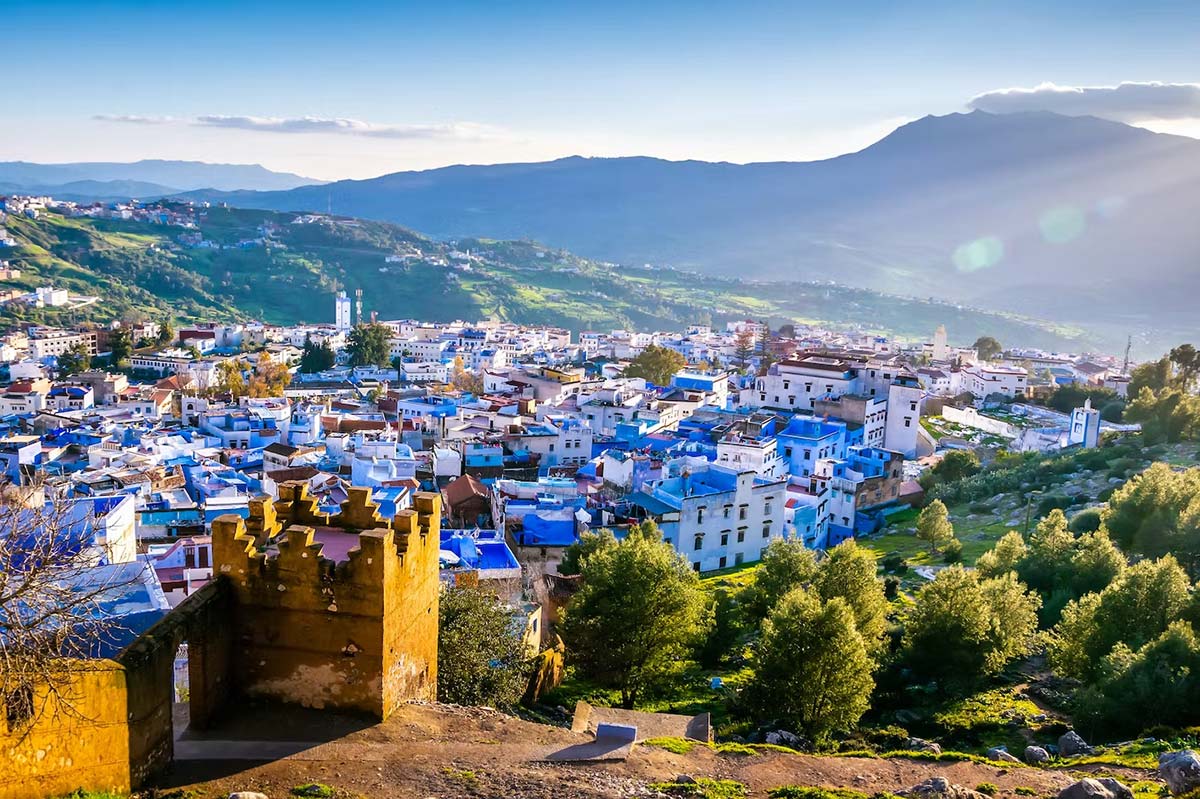
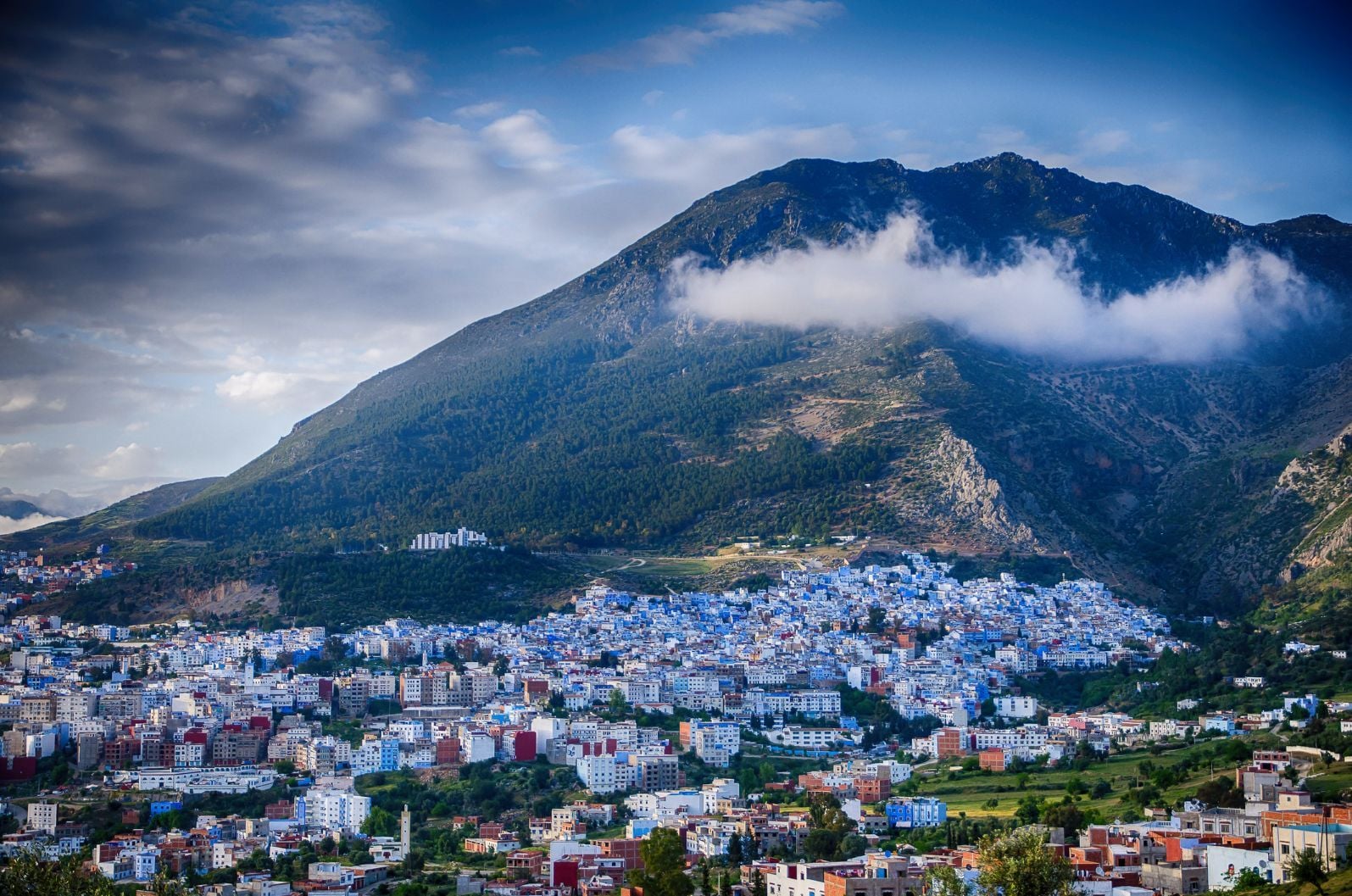
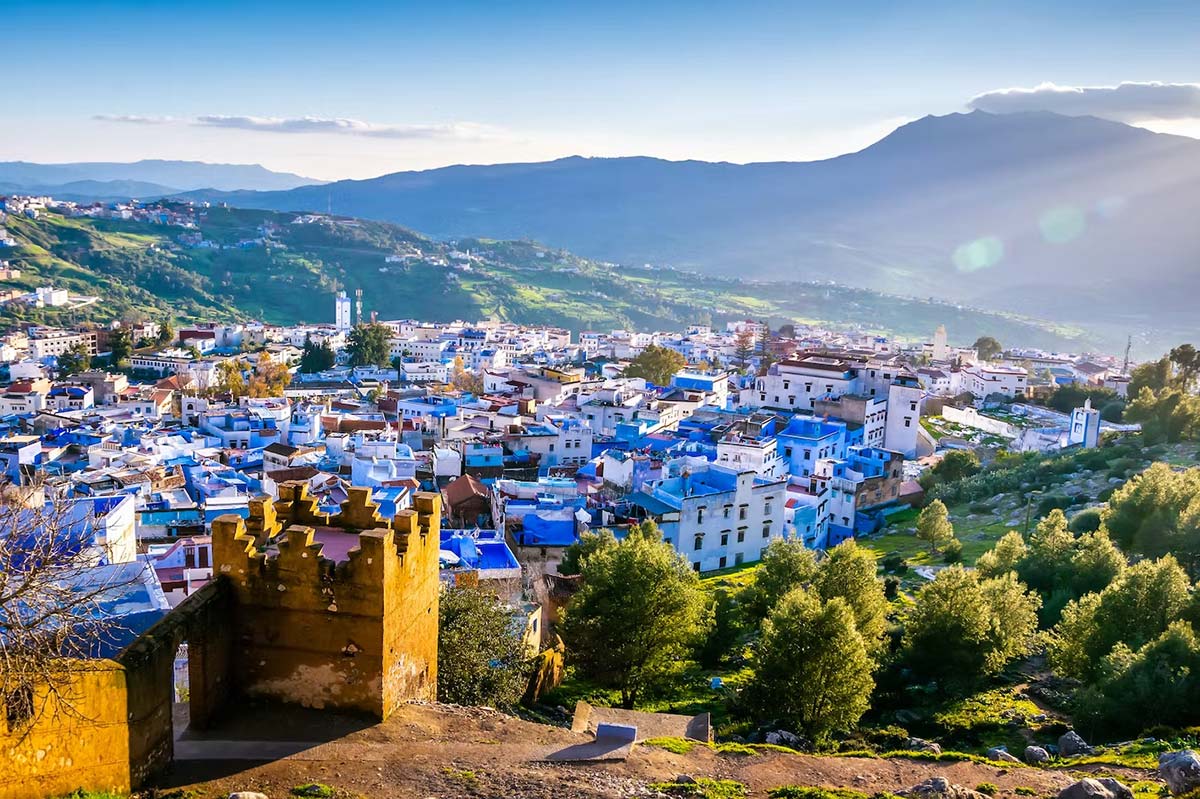
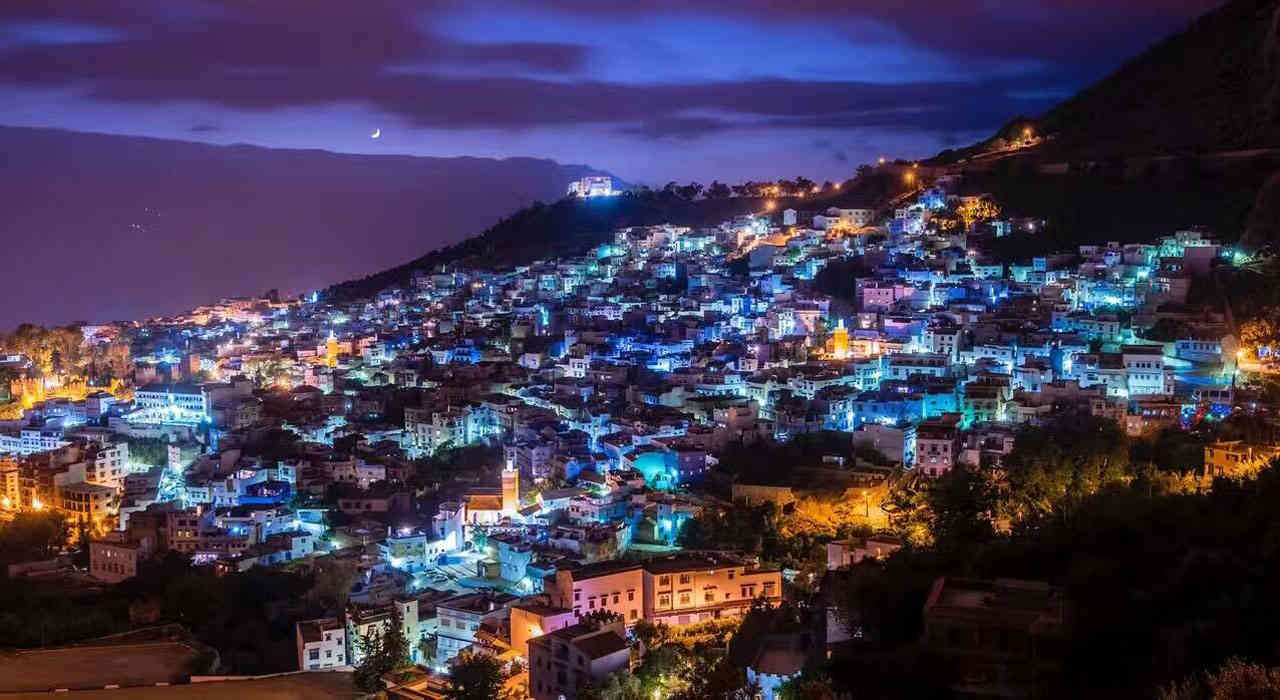
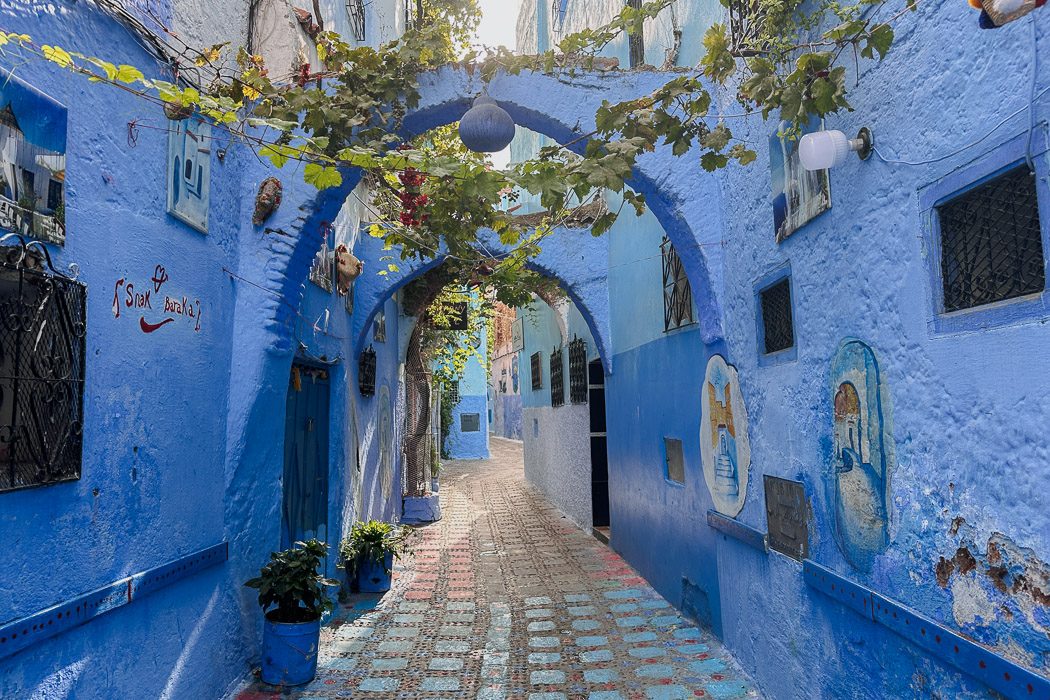
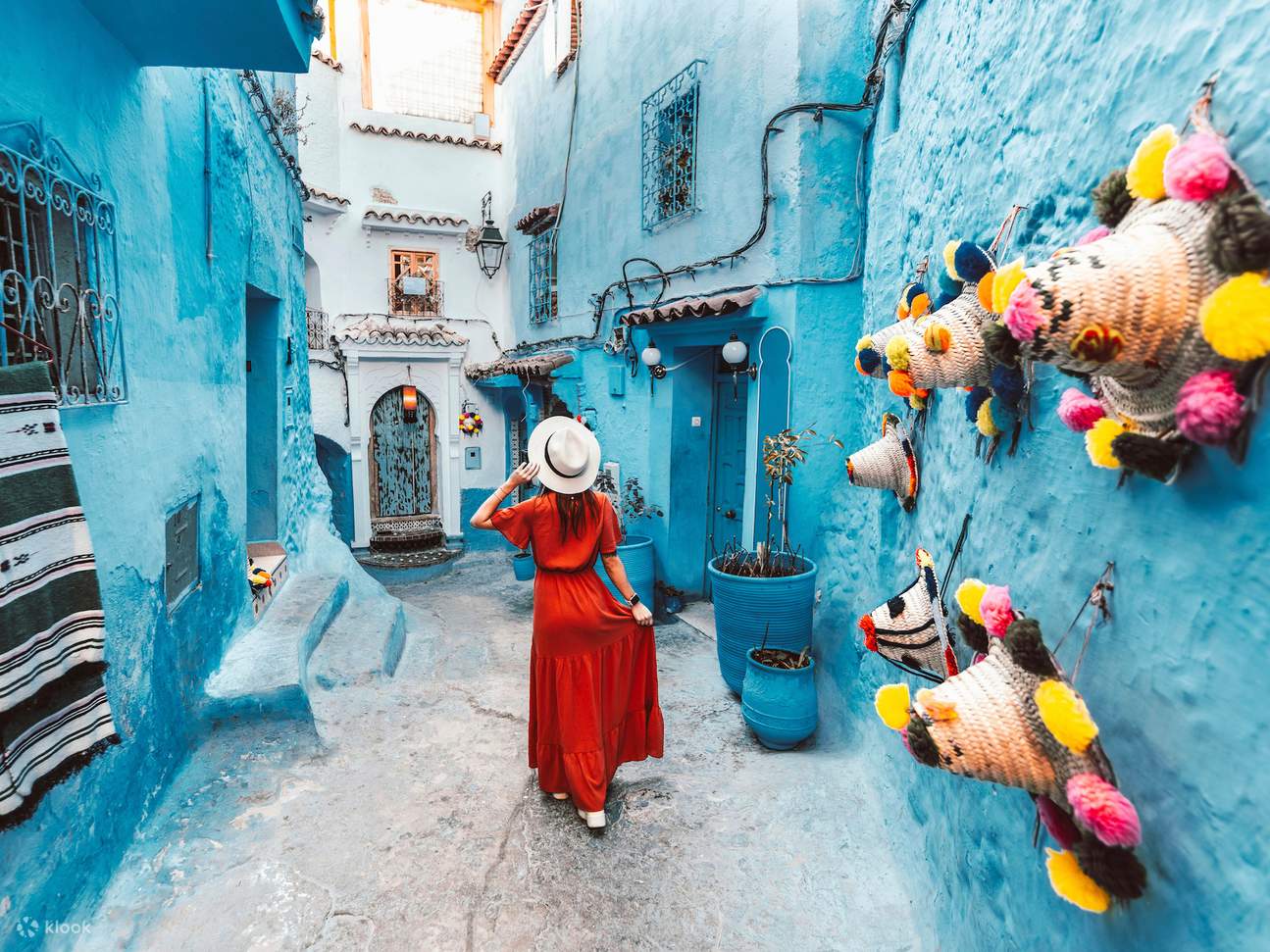
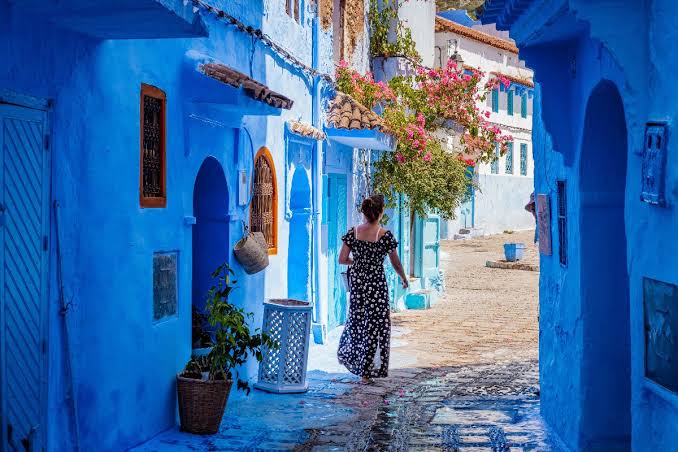
Chefchaouen is a small mountain city in northern Morocco, set against the Rif and best known for the blue-painted lanes of its historic medina. The city was founded in the late 15th century as a fortified settlement, and its compact old town still centers on Place Outa el-Hammam, the Kasbah and the Grand Mosque area. The blue streets are the visual signature, but Chefchaouen is most rewarding when treated as a lived neighborhood rather than a photo set. Residential lanes, bakeries, cafés, textile and leather shops, small workshops and guesthouses share the same steep pedestrian streets. The exact origin of the bluewashing tradition is debated, so the guide should present it as a layered local custom rather than a single proven story. Chefchaouen also works as a gateway to the Rif. Ras El Maa and the Spanish Mosque viewpoint are reached from the edge of the medina, while Akchour and Talassemtane National Park require a road transfer and are better planned as separate nature excursions. Staying two or three nights lets travelers see the medina early and late, when day-trip crowds are lighter, and leaves time for a mountain day without rushing.
Known for
Best for
When Fez may not fit
7 practical points — tap to read
When Fez may not fit
7 practical points — tap to read
- You need consistently step-free access
- You strongly dislike hills, stairs or uneven paving
- You want a major nightlife or club destination
- You want a large luxury-resort ecosystem
- You require direct train or airport access
- You want a beach-focused stay
- You cannot keep mountain plans flexible in wet weather
Plan smarter
Open only what you need
The full guide is here without forcing you through walls of text. Tap a card for the detail relevant to your trip.
How much time to give it
Choose a trip length to see a realistic pace.
Blue-medina essentials
2 days
Blue-medina essentials
2 days
Day 1: Outa el-Hammam, Kasbah area, blue lanes, Ras El Maa and the Spanish Mosque for late-afternoon views. Day 2: explore the medina early, browse crafts, take a long rooftop lunch and spend time in quieter upper and lower lanes.
Chefchaouen plus Akchour
3 days
Chefchaouen plus Akchour
3 days
Use two days for the city at different times of day, then reserve a full day for Akchour or a Talassemtane nature excursion with transport arranged for the season and route.
Slow Rif escape
4 days
Slow Rif escape
4 days
Add a second nature day, a longer guided hike, or a road trip toward Tétouan or the Mediterranean side of the province. Four days suits travelers who value the mountains as much as the blue streets.
Weather & seasons
April–June and September–October are the best all-round periods: days are usually comfortable for the steep medina and the Rif is attractive for walking. July and August are drier but busier, while winter is cooler and wetter and can make mountain routes slippery.
Climate overview
Chefchaouen has a mountain-influenced Mediterranean climate. Summers are warm and generally dry, while autumn through…
Climate overview
Chefchaouen has a mountain-influenced Mediterranean climate. Summers are warm and generally dry, while autumn through…
Chefchaouen has a mountain-influenced Mediterranean climate. Summers are warm and generally dry, while autumn through early spring is cooler and much wetter than many visitors expect from Morocco. Even in warm months, evenings can feel fresh; in winter, pack proper layers and rain protection.
Spring
March–May is green and mild, with occasional rain. April and May are especially good for city walking and mountain…
Spring
March–May is green and mild, with occasional rain. April and May are especially good for city walking and mountain…
March–May is green and mild, with occasional rain. April and May are especially good for city walking and mountain scenery, but trails can stay muddy after wet weather.
Summer
June–August is the driest period. The city is warm but usually less intense than inland southern destinations. July…
Summer
June–August is the driest period. The city is warm but usually less intense than inland southern destinations. July…
June–August is the driest period. The city is warm but usually less intense than inland southern destinations. July and August bring the heaviest visitor numbers, so use early mornings and evenings for the medina.
Autumn
September and October are excellent for walking, views and nature trips. Conditions are usually comfortable, with…
Autumn
September and October are excellent for walking, views and nature trips. Conditions are usually comfortable, with…
September and October are excellent for walking, views and nature trips. Conditions are usually comfortable, with rain becoming more likely as the season progresses.
Winter
December–February is quieter, cooler and wetter. Heating quality varies in traditional stays, and heavy rain can…
Winter
December–February is quieter, cooler and wetter. Heating quality varies in traditional stays, and heavy rain can…
December–February is quieter, cooler and wetter. Heating quality varies in traditional stays, and heavy rain can affect mountain roads and trails. Pack warm layers and waterproof footwear.
Arrival & movement
Getting there and moving around
Getting to the city
Chefchaouen has no airport and no railway station, so every arrival ends with a road journey. The most common…
Getting to the city
Chefchaouen has no airport and no railway station, so every arrival ends with a road journey. The most common…
Chefchaouen has no airport and no railway station, so every arrival ends with a road journey. The most common approaches are by intercity coach, grand taxi or private transfer from Tangier, Tétouan or Fez. If you are staying inside the medina, ask your accommodation for the correct vehicle drop-off gate before arrival because most historic lanes are pedestrian-only.
Getting around
The medina is best explored on foot. Petit taxis are useful in the lower and newer parts of town, including…
Getting around
The medina is best explored on foot. Petit taxis are useful in the lower and newer parts of town, including…
The medina is best explored on foot. Petit taxis are useful in the lower and newer parts of town, including road-accessible accommodation and the bus-station area. For Akchour, Talassemtane trailheads and regional trips, use a grand taxi, private driver or organized excursion. Distances look short on a map, but the slopes and stairs make some walks much more demanding.
Airport access
Tétouan Saniat R'mel Airport is the closest airport by road, but Tangier Ibn Battouta Airport is often the more…
Airport access
Tétouan Saniat R'mel Airport is the closest airport by road, but Tangier Ibn Battouta Airport is often the more…
Tétouan Saniat R'mel Airport is the closest airport by road, but Tangier Ibn Battouta Airport is often the more practical international gateway because it has a broader flight network. From either airport, continue by road. Fez-Saïss Airport is possible for travelers approaching from central Morocco, but the onward transfer is considerably longer.
Train access
Chefchaouen has no train station. Tangier is the most practical rail gateway for travelers using Al Boraq or other…
Train access
Chefchaouen has no train station. Tangier is the most practical rail gateway for travelers using Al Boraq or other…
Chefchaouen has no train station. Tangier is the most practical rail gateway for travelers using Al Boraq or other ONCF services, while Fez is another option for itineraries approaching from the south or east. From the railhead, continue by coach, grand taxi or private transfer.
Bus & coach
Intercity coaches are one of the simplest ways to reach Chefchaouen, with regular connections commonly available from…
Bus & coach
Intercity coaches are one of the simplest ways to reach Chefchaouen, with regular connections commonly available from…
Intercity coaches are one of the simplest ways to reach Chefchaouen, with regular connections commonly available from Tangier, Tétouan and Fez. Timetables, departure points and fares change, so check the operator’s live schedule for your exact travel date rather than relying on a static timetable.
Walking
Chefchaouen is compact and very walkable for travelers comfortable with hills. The main challenge is not distance but…
Walking
Chefchaouen is compact and very walkable for travelers comfortable with hills. The main challenge is not distance but…
Chefchaouen is compact and very walkable for travelers comfortable with hills. The main challenge is not distance but repeated stairs, steep gradients and uneven stone. Shoes with good grip are important, especially after rain.
Medina access
Cars do not reach most addresses inside the historic medina. Before arrival, confirm the best gate or road-accessible…
Medina access
Cars do not reach most addresses inside the historic medina. Before arrival, confirm the best gate or road-accessible…
Cars do not reach most addresses inside the historic medina. Before arrival, confirm the best gate or road-accessible meeting point with your accommodation and ask how much uphill walking remains. With heavy luggage, arrange porter help in advance and agree the price before the service begins.
Choose your base
Where to stay in Chefchaouen
Choose by atmosphere and access, then compare actual stays.
Outa el-Hammam / central medina
Best for: First-time visitors, short stays, atmosphere
Outa el-Hammam / central medina
Best for: First-time visitors, short stays, atmosphere
Best for: First-time visitors, short stays, atmosphere
The historic and social center around the Kasbah, Grand Mosque area, cafés and restaurants. Extremely convenient for sightseeing, but also the busiest part of the old town.
Ras El Maa / upper eastern medina
Best for: Views, photography, quieter mornings
Ras El Maa / upper eastern medina
Best for: Views, photography, quieter mornings
Best for: Views, photography, quieter mornings
Steeper and more residential, with fast access to Ras El Maa and the Spanish Mosque trail. Beautiful for views, but expect more stairs with luggage.
Bab El Ain / lower medina
Best for: Easier arrivals, practical stays, budget travelers
Bab El Ain / lower medina
Best for: Easier arrivals, practical stays, budget travelers
Best for: Easier arrivals, practical stays, budget travelers
A useful lower-medina base with better road access than the upper lanes and a relatively easier final walk to many properties.
Bab Souk / western medina edge
Best for: Medina atmosphere with simpler road access
Bab Souk / western medina edge
Best for: Medina atmosphere with simpler road access
Best for: Medina atmosphere with simpler road access
Close to the old town while staying nearer to vehicle access. A good compromise for travelers who want the medina without the longest uphill luggage carry.
Ville Nouvelle / Avenue Hassan II area
Best for: Parking, taxis, families, mobility-conscious travelers
Ville Nouvelle / Avenue Hassan II area
Best for: Parking, taxis, families, mobility-conscious travelers
Best for: Parking, taxis, families, mobility-conscious travelers
The newer lower town is less atmospheric than the blue medina but easier for vehicles, parking, the bus station and flatter day-to-day logistics.
Mountain outskirts
Best for: Views, quiet, drivers, hiking-focused stays
Mountain outskirts
Best for: Views, quiet, drivers, hiking-focused stays
Best for: Views, quiet, drivers, hiking-focused stays
Guesthouses above or outside the city can offer excellent Rif views and parking, but usually require a taxi or steep walk to reach the medina.
Stay in the city
Stays coming to Chefchaouen
Published stays will appear automatically as the inventory grows.
Explore
What to see & do in Chefchaouen
Visual recommendations stay visible; deeper planning information stays one tap away.
Live the city
Food, shopping, evenings & local help
Open the editorial cards for context; use live listings for specific places.
Food scene
Chefchaouen’s food scene is mostly casual and traditional rather than fine-dining focused. Expect Moroccan…
Food scene
Chefchaouen’s food scene is mostly casual and traditional rather than fine-dining focused. Expect Moroccan…
Chefchaouen’s food scene is mostly casual and traditional rather than fine-dining focused. Expect Moroccan breakfasts, breads, soups, salads and tagines, plus relaxed rooftop restaurants. A distinctive local product is fresh goat’s jben from the surrounding mountain region, often eaten with bread, olive oil or msemen.
Shopping & crafts
Chefchaouen is a good place to look for woven wool goods, blankets, rugs, textiles, leather and woodwork. Compare…
Shopping & crafts
Chefchaouen is a good place to look for woven wool goods, blankets, rugs, textiles, leather and woodwork. Compare…
Chefchaouen is a good place to look for woven wool goods, blankets, rugs, textiles, leather and woodwork. Compare workmanship across several shops, ask where items were made and avoid assuming every blue souvenir is locally produced. Practical handmade textiles are among the most characteristic purchases.
Evenings
Nightlife is low-key. Evenings are mainly cafés, tea, rooftop terraces and dinner around the medina rather than…
Evenings
Nightlife is low-key. Evenings are mainly cafés, tea, rooftop terraces and dinner around the medina rather than…
Nightlife is low-key. Evenings are mainly cafés, tea, rooftop terraces and dinner around the medina rather than clubs. Alcohol is limited to licensed venues. Travelers prioritizing bars and late-night nightlife will find Tangier a better fit.
Day trips
Akchour and Talassemtane National Park are the most rewarding nature excursions, with waterfalls, forest and…
Day trips
Akchour and Talassemtane National Park are the most rewarding nature excursions, with waterfalls, forest and…
Akchour and Talassemtane National Park are the most rewarding nature excursions, with waterfalls, forest and limestone scenery. Tétouan is a realistic cultural day trip by road, and the Mediterranean coast near Oued Laou can fit a wider northern itinerary. Tangier and Fez are better treated as previous or next stops than rushed same-day returns.
Useful without booking
Free value before you spend anything
Free things to do
8 practical points — tap to read
Free things to do
8 practical points — tap to read
- Walk the blue medina early in the morning.
- Spend time in Place Outa el-Hammam.
- Walk to Ras El Maa at the upper edge of the medina.
- Hike to the Spanish Mosque viewpoint.
- Watch sunset from the hills above the city.
- Explore the quieter lanes near Bab Onsar and Ras El Maa.
- Browse textile and craft workshops without obligation to buy.
- Photograph the medina from public viewpoints at different times of day.
Must know before you go
12 practical points — tap to read
Must know before you go
12 practical points — tap to read
- Chefchaouen has no airport or railway station; the final journey is always by road.
- The medina is compact but steep, and stairs matter more than distance.
- Ask your accommodation for the correct vehicle drop-off gate before arrival.
- Staying overnight gives a quieter experience than a rushed midday day trip.
- Akchour requires a road transfer; it is not a short walk from the city center.
- Carry cash for taxis, smaller cafés, tips and many small shops.
- Download offline maps before mountain excursions.
- Winter is cooler and wetter than many first-time Morocco visitors expect.
- After heavy rain, mountain paths can be slippery or temporarily unsafe.
- Recreational cannabis remains illegal; decline offers and do not carry it.
- Ask before photographing residents, especially children.
- The historical reason for Chefchaouen’s bluewashing is debated; avoid presenting one theory as proven fact.
Practical confidence
What travelers should know about Chefchaouen
Open the topic you need instead of reading one long manual.
Safety
Chefchaouen is generally relaxed, but normal travel precautions still apply. Keep valuables secure in busy photo…
Safety
Chefchaouen is generally relaxed, but normal travel precautions still apply. Keep valuables secure in busy photo…
Chefchaouen is generally relaxed, but normal travel precautions still apply. Keep valuables secure in busy photo lanes, avoid isolated unfamiliar streets late at night and use authorized guides when hiring one. For Akchour or Rif hikes, check weather and trail conditions, carry enough water and avoid gorges or exposed routes during heavy rain. Recreational cannabis possession and use remain illegal in Morocco; decline offers and do not carry it.
Accessibility
Chefchaouen is one of Morocco's more difficult tourist cities for travelers with significant mobility limitations…
Accessibility
Chefchaouen is one of Morocco's more difficult tourist cities for travelers with significant mobility limitations…
Chefchaouen is one of Morocco's more difficult tourist cities for travelers with significant mobility limitations because the medina is steep, stepped and uneven. Lower modern roads and some accommodation outside or at the edge of the medina are easier than upper blue lanes, but many traditional guesthouses still rely on stairs. The Ministry of Culture grants free Kasbah entry to visitors with reduced mobility, yet reaching and moving around the wider historic center can remain challenging. Confirm the complete route from vehicle drop-off to room before booking.
Money
Morocco uses the Moroccan dirham (MAD). Chefchaouen has ATMs and exchange options in the town, but cash remains…
Money
Morocco uses the Moroccan dirham (MAD). Chefchaouen has ATMs and exchange options in the town, but cash remains…
Morocco uses the Moroccan dirham (MAD). Chefchaouen has ATMs and exchange options in the town, but cash remains important for taxis, small cafés, market purchases, tips and many guesthouses or small shops. Carry smaller notes and coins, and do not rely on card acceptance deep inside the medina or on mountain excursions.
Tipping
Tipping is customary but usually modest. Round up small café or taxi bills when service is good; around 5–10% is a…
Tipping
Tipping is customary but usually modest. Round up small café or taxi bills when service is good; around 5–10% is a…
Tipping is customary but usually modest. Round up small café or taxi bills when service is good; around 5–10% is a useful restaurant reference when service is not already included. Guides, drivers and luggage helpers are normally tipped according to service quality and duration. Keep small dirham notes available.
Dress & local context
Chefchaouen is relaxed, but modest clothing remains the most comfortable default in residential and religious areas.…
Dress & local context
Chefchaouen is relaxed, but modest clothing remains the most comfortable default in residential and religious areas.…
Chefchaouen is relaxed, but modest clothing remains the most comfortable default in residential and religious areas. Loose clothing that covers shoulders and roughly reaches the knee works well. The mountain climate changes quickly, so add a light layer even in warmer seasons and warmer waterproof layers in winter. Good-grip walking shoes are especially important because the blue lanes are steep and can become slippery when wet.
Ramadan
During Ramadan, daily rhythms shift and some businesses reduce daytime hours before becoming much livelier after…
Ramadan
During Ramadan, daily rhythms shift and some businesses reduce daytime hours before becoming much livelier after…
During Ramadan, daily rhythms shift and some businesses reduce daytime hours before becoming much livelier after sunset. Avoid eating, drinking, smoking or chewing gum conspicuously in public during fasting hours, dress respectfully and check restaurant, monument and transport schedules locally. Roads can become hurried shortly before iftar, so avoid tight transfer plans around sunset.
Internet & connectivity
Mobile coverage and Wi-Fi are generally reliable in Chefchaouen itself, with prepaid SIM and eSIM options widely…
Internet & connectivity
Mobile coverage and Wi-Fi are generally reliable in Chefchaouen itself, with prepaid SIM and eSIM options widely…
Mobile coverage and Wi-Fi are generally reliable in Chefchaouen itself, with prepaid SIM and eSIM options widely available in Morocco. Signal can weaken on mountain roads, in gorges and on more remote trails around Akchour and Talassemtane. Download offline maps before hiking and carry a charged power bank if your phone is your main navigation tool.
Common hassles & scams
6 practical points — tap to read
Common hassles & scams
6 practical points — tap to read
- Unsolicited guide offers in the medina: use an authorized guide and agree the price first.
- Offers to show a “secret” photo street, shortcut or viewpoint may end with an unexpected payment request.
- Agree porter or luggage-help prices before accepting assistance.
- For taxis without a meter, confirm the fare before the ride.
- Compare quality and price before buying higher-value rugs, textiles or leather goods.
- Decline cannabis or hashish offers; recreational possession and use are illegal.
Cultural etiquette
10 practical points — tap to read
Cultural etiquette
10 practical points — tap to read
- Greet people before moving directly into a request, photo or negotiation.
- Ask permission before photographing residents, especially children.
- Do not block doorways or narrow residential lanes for long photo sessions.
- Respect mosque access rules and prayer times; non-Muslim visitor access is restricted in many mosques.
- Dress modestly around religious and residential areas, especially during Ramadan.
- Keep public displays of affection discreet.
- Bargain politely in shops; negotiation is normal, pressure is not.
- Do not photograph police, military or other sensitive facilities.
- Do not fly a drone without the required Moroccan authorization.
- Treat the medina as a living neighborhood rather than a photo set.
Emergency & medical help
Police 190 · Ambulance / Fire 150 · Gendarmerie 177 For urgent help, call the appropriate emergency number. For…
Emergency & medical help
Police 190 · Ambulance / Fire 150 · Gendarmerie 177 For urgent help, call the appropriate emergency number. For…
Police 190 · Ambulance / Fire 150 · Gendarmerie 177 For urgent help, call the appropriate emergency number. For non-urgent visitor problems, ask your accommodation to direct you to the nearest police, medical or local authority service. Chefchaouen is a smaller provincial city. Travelers planning mountain activities should carry appropriate insurance, essential medication and the contact details of their assistance provider.
Traveler lenses
Who does Chefchaouen work best for?
The same destination can feel very different depending on who is traveling.
Families
Chefchaouen works well for families with school-age children and teenagers who enjoy photography, markets and nature.…
Families
Chefchaouen works well for families with school-age children and teenagers who enjoy photography, markets and nature.…
Chefchaouen works well for families with school-age children and teenagers who enjoy photography, markets and nature. The compact medina is less overwhelming than the largest Moroccan old cities, but steep stairs make strollers difficult. For Akchour, choose a route that matches the children’s age, weather and footwear.
Solo travelers
Chefchaouen is a strong solo destination because the center is compact and easy to explore independently. Save the…
Solo travelers
Chefchaouen is a strong solo destination because the center is compact and easy to explore independently. Save the…
Chefchaouen is a strong solo destination because the center is compact and easy to explore independently. Save the accommodation pin and arrival gate offline, use normal precautions after dark and set clear boundaries with unsolicited guides. For remote mountain routes, consider a licensed local guide rather than hiking alone without route knowledge.
Couples
Chefchaouen suits couples who prefer atmosphere, views and slow travel to nightlife. Rooftop breakfasts, quiet…
Couples
Chefchaouen suits couples who prefer atmosphere, views and slow travel to nightlife. Rooftop breakfasts, quiet…
Chefchaouen suits couples who prefer atmosphere, views and slow travel to nightlife. Rooftop breakfasts, quiet early-morning lanes, sunset above the medina and a day in the Rif fit naturally into a two- or three-night stay.
Traveler questions
Chefchaouen FAQ
How many days do I need in Chefchaouen?
Two days is ideal for the city itself. Three days is better if you want Akchour or another meaningful Rif excursion…
How many days do I need in Chefchaouen?
Two days is ideal for the city itself. Three days is better if you want Akchour or another meaningful Rif excursion…
Two days is ideal for the city itself. Three days is better if you want Akchour or another meaningful Rif excursion without rushing.
What is the best time to visit Chefchaouen?
April–June and September–October offer the best balance of comfortable walking weather and attractive mountain…
What is the best time to visit Chefchaouen?
April–June and September–October offer the best balance of comfortable walking weather and attractive mountain…
April–June and September–October offer the best balance of comfortable walking weather and attractive mountain scenery. Summer is drier but busier; winter is cooler and wetter.
Does Chefchaouen have a train station?
No. Tangier and Fez are practical rail gateways; from there continue by coach, grand taxi or private transfer.
Does Chefchaouen have a train station?
No. Tangier and Fez are practical rail gateways; from there continue by coach, grand taxi or private transfer.
No. Tangier and Fez are practical rail gateways; from there continue by coach, grand taxi or private transfer.
Which airport is best for Chefchaouen?
Tétouan is the closest by road, but Tangier is often the more practical international gateway because of its broader…
Which airport is best for Chefchaouen?
Tétouan is the closest by road, but Tangier is often the more practical international gateway because of its broader…
Tétouan is the closest by road, but Tangier is often the more practical international gateway because of its broader flight network.
Can cars enter the blue medina?
Not through most historic lanes. Ask your accommodation which gate or road-accessible drop-off point is best for…
Can cars enter the blue medina?
Not through most historic lanes. Ask your accommodation which gate or road-accessible drop-off point is best for…
Not through most historic lanes. Ask your accommodation which gate or road-accessible drop-off point is best for luggage.
Is Chefchaouen safe for tourists?
Most visits are trouble-free. Use normal precautions with valuables, avoid isolated unfamiliar lanes late at night…
Is Chefchaouen safe for tourists?
Most visits are trouble-free. Use normal precautions with valuables, avoid isolated unfamiliar lanes late at night…
Most visits are trouble-free. Use normal precautions with valuables, avoid isolated unfamiliar lanes late at night and plan mountain excursions around weather and trail conditions.
Is Chefchaouen wheelchair accessible?
The historic medina is difficult because of steep gradients, stairs and uneven paving. Lower-town or medina-edge…
Is Chefchaouen wheelchair accessible?
The historic medina is difficult because of steep gradients, stairs and uneven paving. Lower-town or medina-edge…
The historic medina is difficult because of steep gradients, stairs and uneven paving. Lower-town or medina-edge accommodation is usually easier, but the exact route should be confirmed before booking.
How do I get to Akchour from Chefchaouen?
Akchour is reached by road, normally by grand taxi, private driver or organized excursion. It is not a short walk…
How do I get to Akchour from Chefchaouen?
Akchour is reached by road, normally by grand taxi, private driver or organized excursion. It is not a short walk…
Akchour is reached by road, normally by grand taxi, private driver or organized excursion. It is not a short walk from the city center.
Why is Chefchaouen painted blue?
There is no single definitively proven explanation. Several historical and cultural theories exist, and the…
Why is Chefchaouen painted blue?
There is no single definitively proven explanation. Several historical and cultural theories exist, and the…
There is no single definitively proven explanation. Several historical and cultural theories exist, and the bluewashing has also become a strong modern civic identity.
Is cannabis legal in Chefchaouen?
Recreational possession and use remain illegal in Morocco. Decline offers and do not carry or transport it.
Is cannabis legal in Chefchaouen?
Recreational possession and use remain illegal in Morocco. Decline offers and do not carry or transport it.
Recreational possession and use remain illegal in Morocco. Decline offers and do not carry or transport it.
What food should I try in Chefchaouen?
Try simple northern Moroccan cooking and look for fresh local goat’s jben, often served with bread, olive oil or…
What food should I try in Chefchaouen?
Try simple northern Moroccan cooking and look for fresh local goat’s jben, often served with bread, olive oil or…
Try simple northern Moroccan cooking and look for fresh local goat’s jben, often served with bread, olive oil or msemen.
Where should I stay in Chefchaouen?
Choose the central medina for atmosphere, the upper medina for views, lower-medina gates for easier luggage access,…
Where should I stay in Chefchaouen?
Choose the central medina for atmosphere, the upper medina for views, lower-medina gates for easier luggage access,…
Choose the central medina for atmosphere, the upper medina for views, lower-medina gates for easier luggage access, or the newer town for simpler vehicle access.